Powder Coating
The Finish Starts Long Before the Powder
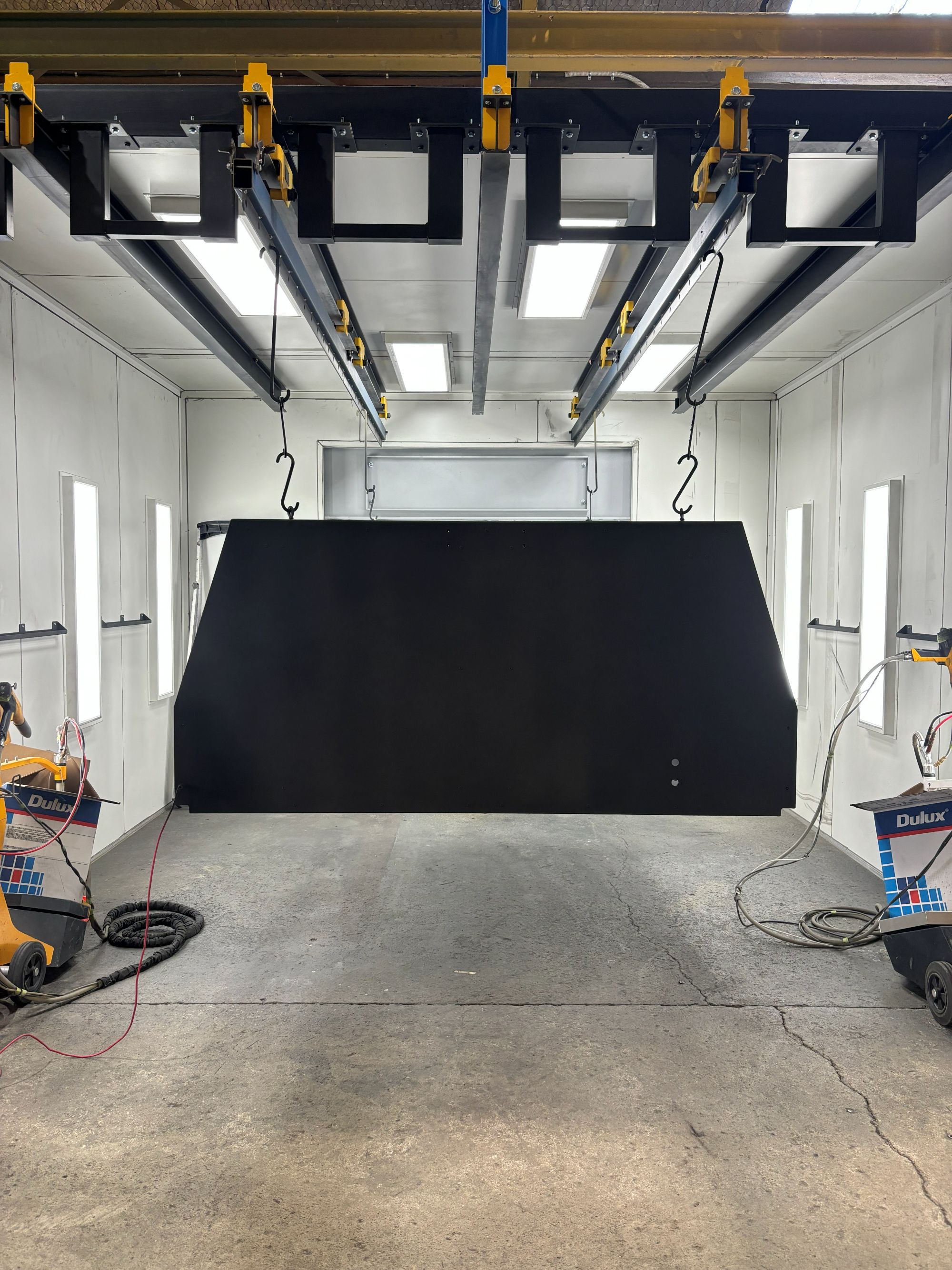
A good powder coat finish is easy to achieve when it's new. Getting it to stay good after years of vibration, movement, stone chips, job sites, gravel roads and New Zealand weather is the hard part. And the biggest difference isn't necessarily the powder itself.
It's everything that happens before the powder is applied.
At M2 Overland, our powdercoating process starts with the raw aluminium sheet and continues through everystage of manufacturing. Material selection, laser cutting, edge preparation,fabrication, sealing, pretreatment, powder, curing and final inspection are alltreated as parts of the same coating system.
Because if you get one ofthose stages wrong, the finish will eventually tell you.
Good enough, isn't.
It Starts at the Laser Cutter
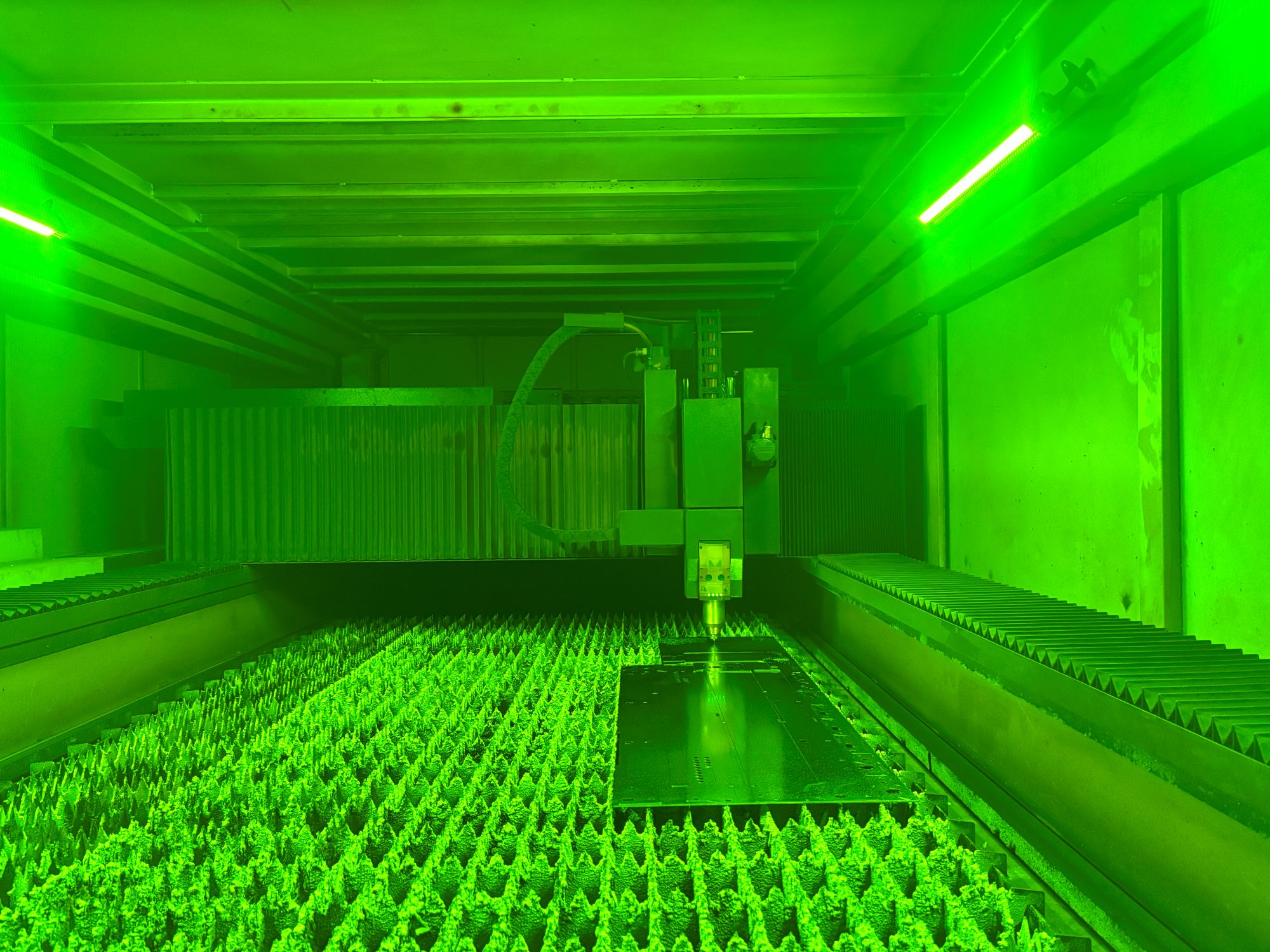
We manufacture from 5052 marine-grade aluminium, and we deliberately laser cut our sheet without protective plastic film attached.
There's a reason for that.
When a laser cuts through protective film, the heat can melt the film around the cut edge and leave residues on the aluminium. That is exactly the type of contamination you don't want underneath a coating system.
Laser cutting also allows us to cut without introducing cutting oils, coolants or lubricants onto the material.
So rather than trying toremove contamination later, our approach is simpler:
Don't introduce it in the first place.
Every Cut Edge Is Linished and Rounded
This is one of the most important parts of our process – and one most people will never notice.
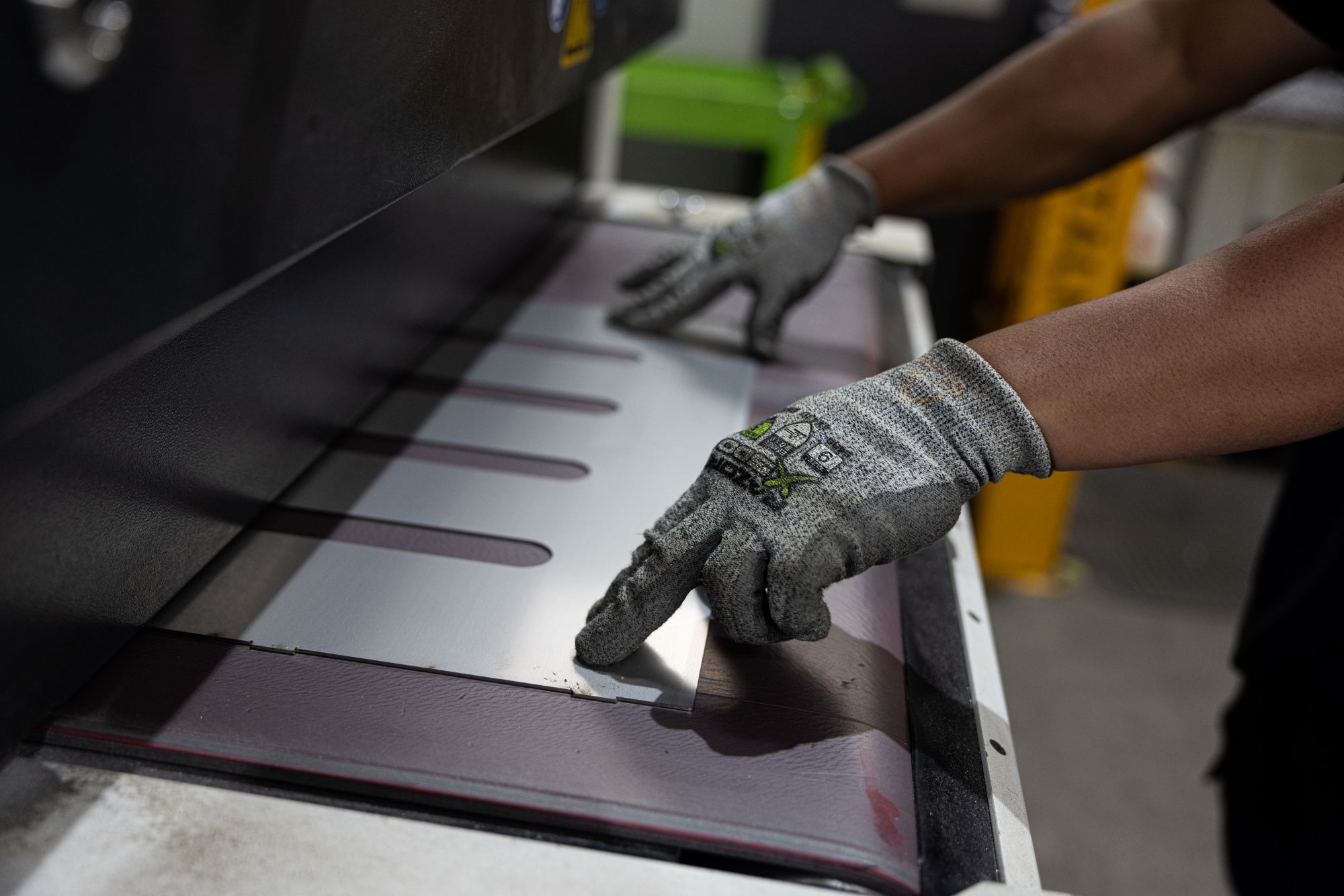
After laser cutting,components go through our automated linishing and edge-rounding process.
Linishing gives us a clean,consistent surface before the parts move further through production.
But the edge rounding isparticularly important.
Powder coating – like most coatings – doesn't perform well over a perfectly sharp edge. As the powder melts and flows during curing, the coating naturally becomes thinner around a sharp corner. In extreme cases, you can actually see the silver aluminium showing through the finished coating.
That thin edge then becomes one of the most vulnerable areas of the entire part.
So we mechanically round both the internal and external edges of our laser-cut components before they are coated.
It removes sharp edges for the person using the product, but more importantly, it allows the coating to wrap around the edge with a much more consistent film thickness.
It's a small manufacturing detail with a big effect on long-term coating performance.
We Control Contamination Through the Entire Factory
There is little point preparing aluminium properly at the powder coating stage if it has already been contaminated during manufacturing.
That's why our approach continues through CNC folding, pre-fabrication assembly and fabrication.
These processes are managedas contamination-controlled manufacturing environments, with grease,oils and process lubricants kept away from coating-critical surfaces.
It's another example of doing the work earlier rather than trying to fix a problem at the end.
Even Our Sealer Had to Survive the Powder Coat Oven
Some of our assemblies need to be sealed or bonded before they are powder coated.
That creates another problem.
A conventional sealant may work perfectly at normal temperatures, then soften, shrink, move or lose integrity when the complete assembly goes through a powder coating cure cycle at temperatures around 200°C.
That wasn't acceptable to us.
We use a specialist German bonding and sealing product specifically designed to be powder coated over and withstand the full oven cycle.
We spent considerable time finding and validating the right product. To date, it is the only product we've found that continues to maintain its integrity through the process to the standard we require.
It's considerably more specialised than simply applying sealant after coating.
But it means the assembly can be designed, sealed and coated as a complete system.
Then We Get to the Actual Powder Coating
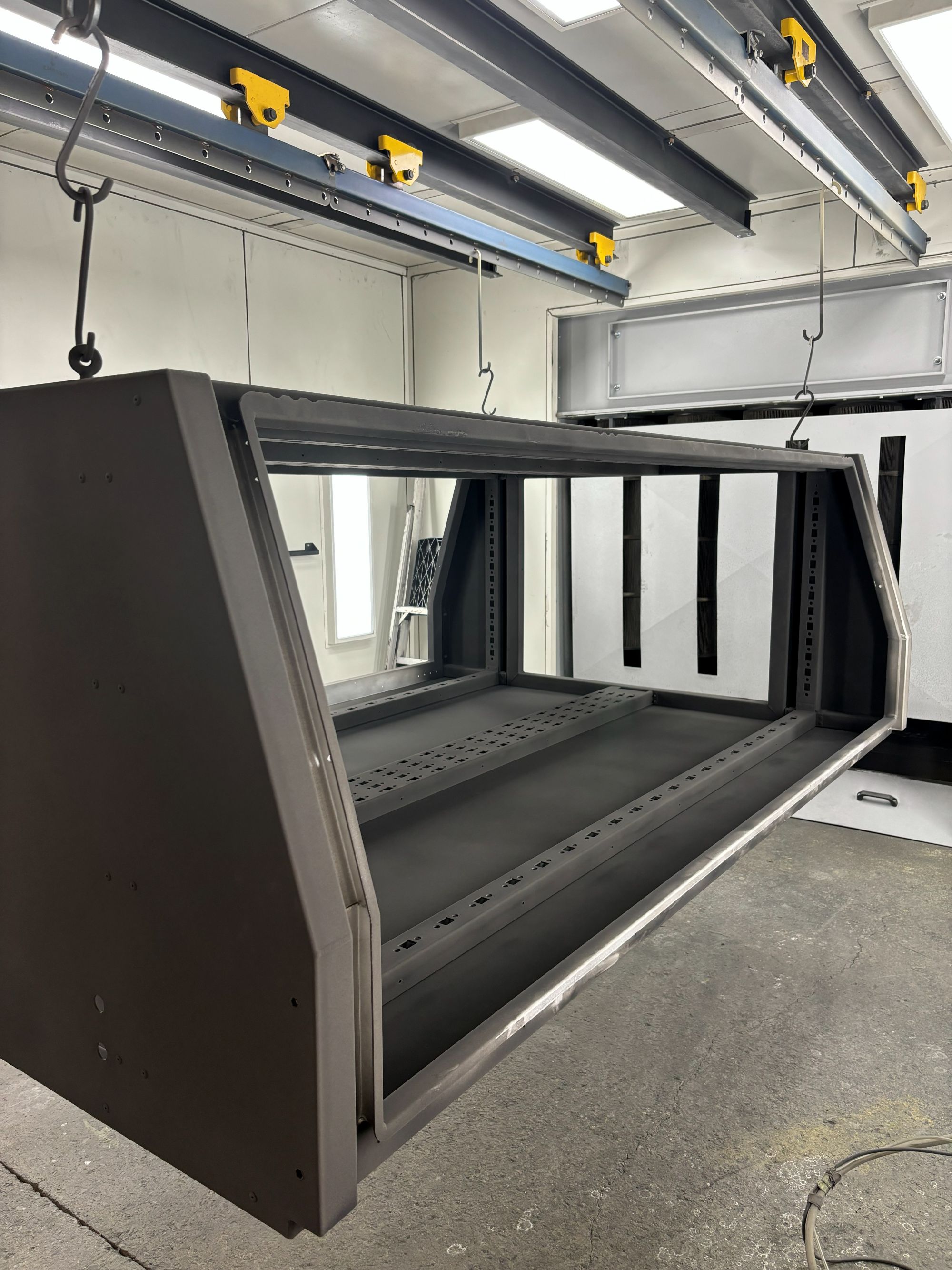
By the time an M2 component reaches our coating line, a significant amount of work has already gone into preparing it.
Now the aluminium itself needs to be prepared.
Aluminium Pretreatment
Bare aluminium naturally forms an oxide layer, so simply spraying powder onto it isn't enough if you want reliable long-term adhesion.
Our aluminium goes through acontrolled etching and pretreatment process before powder is applied.
The etching prepares the surface for adhesion, while the subsequent treatment creates a conversion layer between the aluminium and powder coating.
That layer performs two important jobs:
It improves the bond between the powder and aluminium, and it provides additional protection against under-film aluminium corrosion and oxidation if the coating is eventually chipped or damaged.
This is what helps stop a small chip becoming a much larger coating problem over time.
Why We Don't Use Dip Tanks
A lot of powder coating pretreatment systems immerse components in tanks.
For the products we manufacture, we made a deliberate decision not to use an immersion process.
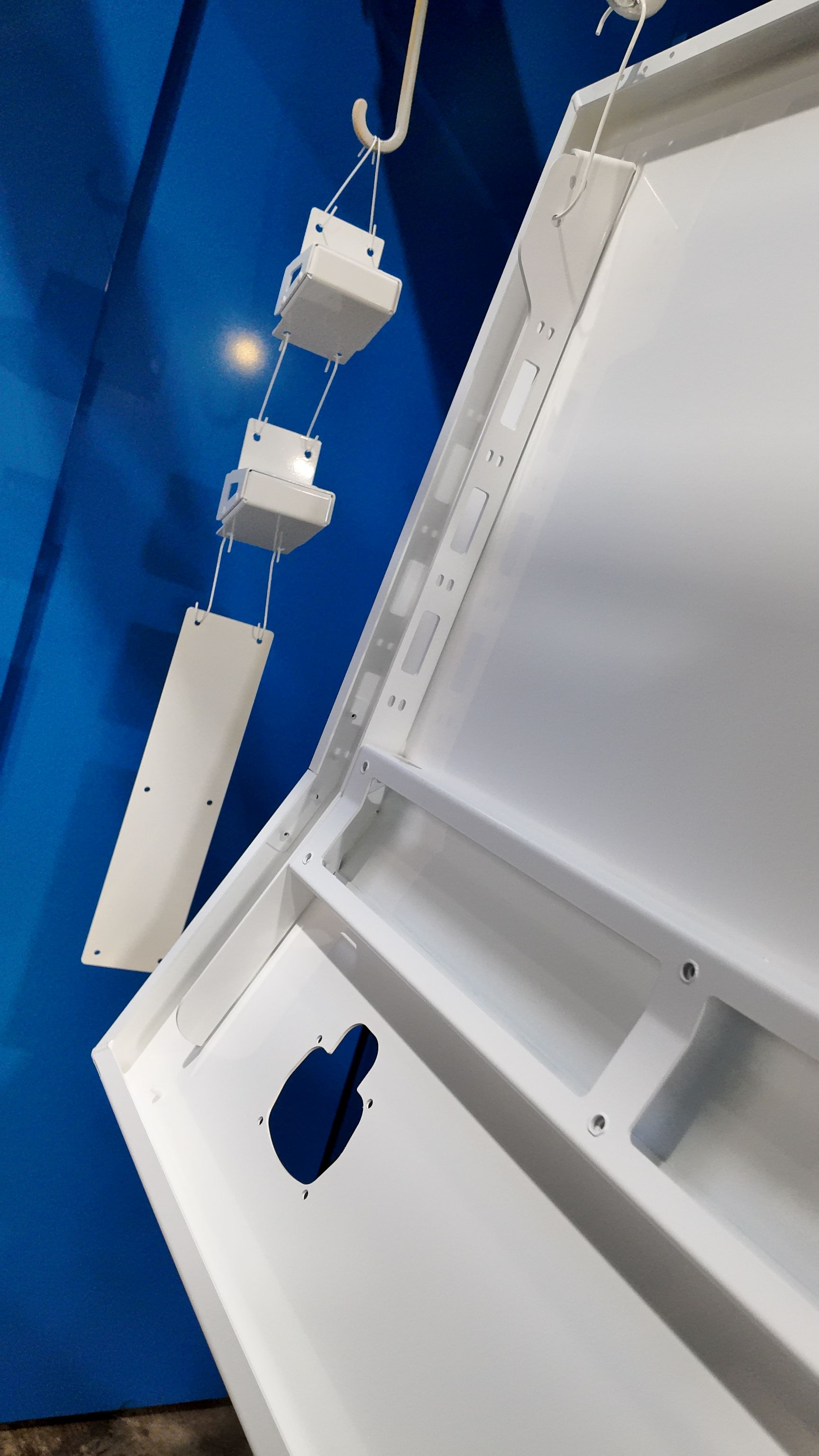
Our trays, canopies and accessories contain complex folds, seams, cavities and sealed areas. With an immersion process, treatment chemicals and rinse water can become trapped in areas that are extremely difficult to completely drain.
You might not see that moisture or residue when the part goes into the oven.
But you'll know about itlater if it compromises the coating.
So our pretreatment system is specifically designed to avoid immersion altogether.
It's not the simplest solution.
It's the solution we believe is right for the type of assemblies we manufacture and for the long-term integrity of the finished coating.
Powder Designed for a Vehicle – Not a Fence
Our products don't sit still.
They're attached to vehicles.
They vibrate. They flex. They get knocked. Tools get dragged across them. Stones hit them. They travel down corrugated roads, through worksites and across the country.
So we use a specially developed powder coating system selected around the demands of the transport environment.
The requirement isn't simply to look good.
It needs to retain its finishwhile living on something that moves.
There's a big difference.
The Cure Cycle Matters Too
Applying good powder badly still gives you a bad result.
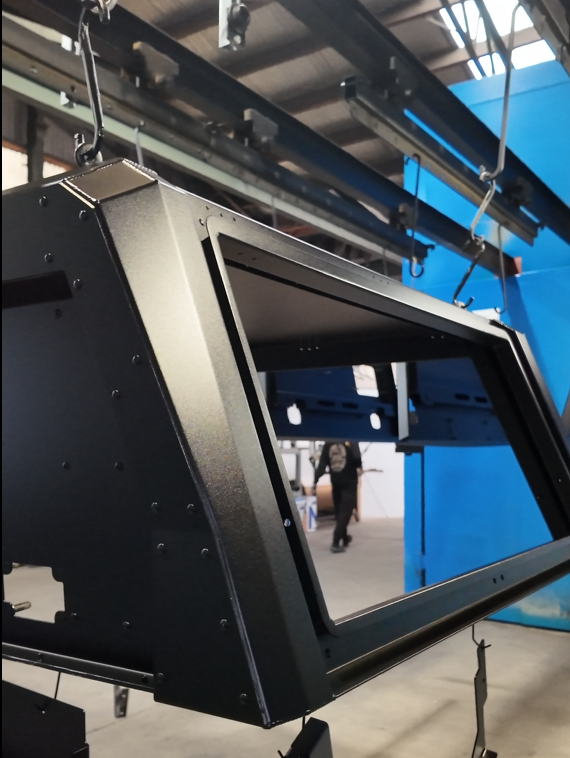
Our coating is cured through our gas-fired powder coating oven, designed to bring components up to their required curing temperature quickly and consistently.
This matters because powdercoating doesn't simply need to be "hot".
The coating needs the correct combination of temperature and time to properly flow and cure.
Poor temperature control can affect appearance, cure and ultimately adhesion.
Our oven gives us the heating capacity and control required to properly manage that process across the range of aluminium components we manufacture.
Then We Inspect Every Part
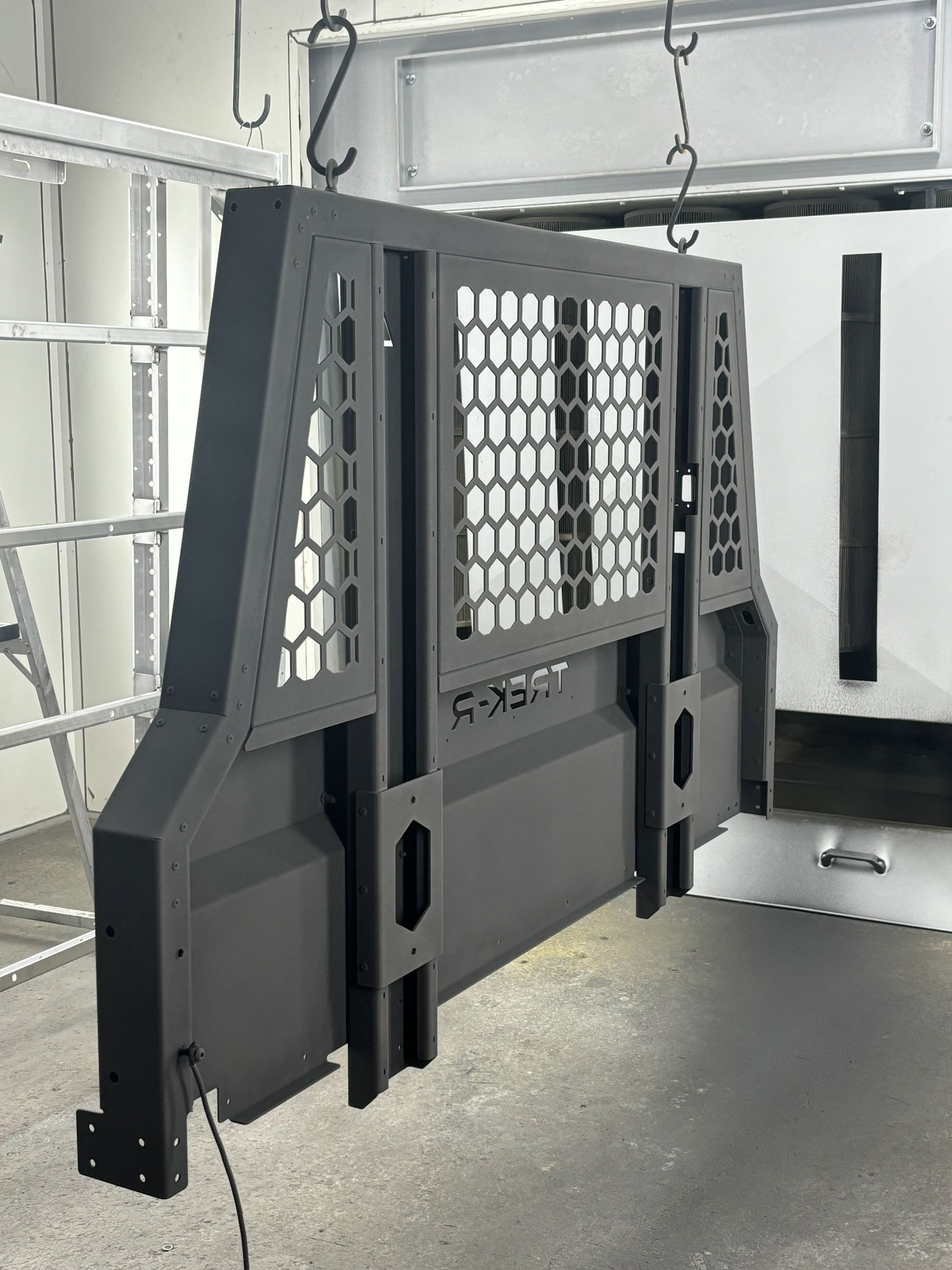
Once cured, every component is individually inspected in our dedicated powder coating QC area.
The area is specifically lit to make coating defects and surface inconsistencies easier to see than they would be under normal factory lighting.
And we don't rely on appearance alone.
We measure the powder coat film thickness to make sure it is within the correct specification.
Because a coating can lookright and still be too thin – or too heavy. Both can affect long-termperformance.
So we check it.
We're looking at the finish before it disappears into an assembly, and we're verifying that the coating itself has been applied correctly.
If it's not right, it doesn'tget fitted.
Good enough, isn't.
Why Do We Take It This Far?
Because powder coating isn't just powder.
A premium powder applied over contaminated aluminium, a razor-sharp edge or poor pretreatment is still a poor coating system.
So we control what we cancontrol from the beginning:
Clean raw material. Lasercutting without protective film. No cutting lubricants. Linished surfaces. Rounded edges. Contamination-controlled fabrication. High-temperature compatible sealers and bonding products. Aluminium-specific pretreatment. No immersion tanks. Transport-specific powder. Controlled curing. Measured coating thickness. Dedicated final QC.
Most of that work isinvisible once the product is assembled.
That's exactly the point.
You should just see a greatfinish.
Years later, you should stillsee a great finish.
We Take Powder Coating Seriously
Could we make the processeasier? Absolutely.
Could we remove steps and still produce something that looks great when it leaves the factory? Absolutely.
That's not the standard we're interested in.
Good enough, isn't.
Our products operate in one of the harsher environments you can put a powder-coated aluminium assembly into– mounted to a vehicle and subjected to constant vibration, impact, weather and everyday use.
So we've developed the manufacturing and coating process around that reality.
You'd be hard pressed to find another ute tray and canopy manufacturer that takes powder coating preparation and process control to the extent we do.
We're proud of that.
Because for us, powdercoating isn't the last step in manufacturing.
It's something we engineer for from the first cut.